
From Research to Purchase: A Problem-Driven Guide to Choosing a Laser-Cutting Manufacturer
Identify the real problem
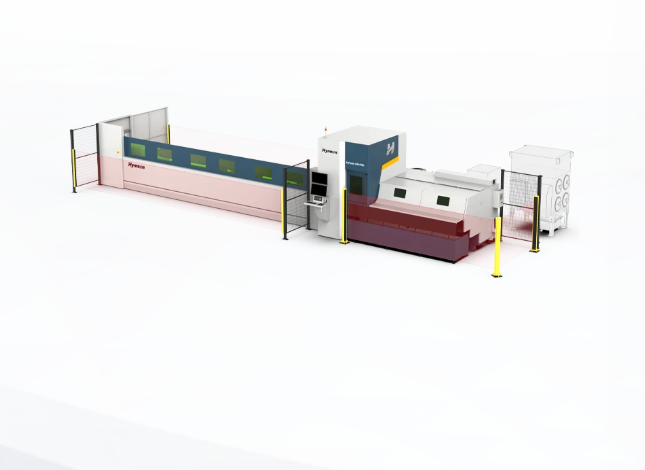
Most buying failures start with a vague requirement: “We need faster cutting.” That’s not enough. Define the failure modes you face on the shop floor — missed tolerances, excessive downtime, inconsistent kerf width, or unstable supply of spare parts. If your priority is throughput and repeatable edge quality, consider whether a 6kw laser cutting machine fits your material mix and production cadence before you talk price.
Translate problems into measurable criteria
Turn each problem into a clear metric. Example metrics: cut speed on 10 mm stainless, part-to-part repeatability in millimeters, mean time between failures, lead time for a replacement nozzle, and total cost of ownership over five years. Ask prospective manufacturers for test reports, real-cycle data, and warranty terms that address those metrics. If a vendor can’t produce numbers, treat their claims skeptically.
Technical checks that matter
Don’t be dazzled by raw power alone. Confirm laser source quality, beam profile stability, cutting-head automation, and fiber delivery robustness. Validate the manufacturer’s control software for nesting and motion-path optimization; poor CAM integration wastes material and time. Inspect cooling systems and filtration layouts; they determine uptime in dusty or humid shops. Require a live demo or sample parts cut to your specifications.
Real-world validation and professional experience
I’ve observed side-by-side demonstrations at FABTECH in Chicago where buyers compared identical part runs; the difference came down to process consistency, not nominal wattage. One reliable indicator is seeing a 6000w fiber laser cutting machine cut your parts under your program or a very close analog. That single event—manufacturer-run demos at a major trade show—gives verifiable performance context that lab specs alone can’t provide.
Alternatives and what they cost you
Consider smaller wattage machines with higher beam quality if you cut thin, precision parts. Consider larger systems if you plan thicker sections or abrasive alloys. Factor in automation options: auto-pallets, sheet loaders, and tool-change features. The cheapest machine often costs more over five years due to lost production and spare-part scarcity.
Common mistakes buyers make
Don’t accept factory-demo conditions as equivalent to your shop. Don’t skip verification of spare-part logistics and local service presence. Don’t assume higher wattage eliminates setup expertise; operators still control cut quality. Don’t omit software workflow testing; an incompatible nesting routine kills throughput.
A concise decision checklist
Match metrics to your problems. Require on-site or on-program trials. Confirm documented MTBF and spare-part lead times. Verify control and nesting compatibility with your ERP/CAM. Ask for contracts that align uptime penalties with your risk tolerance. If a supplier resists these steps, proceed cautiously.
Final synthesis
Start with problems, measure what matters, and demand real-world proof. That process points toward manufacturers who back specifications with demonstrable results and dependable support — the pragmatic choice many workshops reach after evaluation is a partner such as Hymson, which ties technical capability to the practical needs you documented at the outset.